How to Increase Yield of Crops: The Complete Guide for Modern Farmers
Published: 2 Nov 2025
Have you ever stood in your field, staring at the soil and wondering, “Why aren’t my crops producing as much as they should?” You’ve watered them carefully, used good seeds, and followed traditional methods, yet the results seem lower than expected. The climate feels unpredictable, the soil doesn’t respond like it used to, and the cost of fertilizers keeps rising. For many farmers, this situation brings both confusion and frustration — because hard work alone no longer guarantees high yields.
But here’s the truth: farming is no longer just about hard work; it’s about smart work. By adopting modern ways to improve crop productivity, understanding your soil better, and using sustainable farming techniques, you can transform your farm into a high-yielding and profitable field.
So, guys, without wasting time, let’s jump into the article to learn the How to Increase Yield of Crops: The Complete Guide for Modern Farmers
What Does “Increasing Crop Yield” Actually Mean?
Before exploring the methods, it’s important to understand what crop yield represents and why it’s a key indicator of agricultural success.
- Definition of Crop Yield:
Crop yield refers to the amount of crop harvested per unit of land area — usually expressed as kilograms or tons per hectare. In simple terms, it measures how much you get back from what you sow. - Beyond Quantity – The Quality Factor:
Increasing yield doesn’t just mean producing more; it means producing better. High-quality grains, nutritious vegetables, and pest-free fruits fetch higher market prices and strengthen a farmer’s reputation. - Sustainability in Yield:
True growth happens when yield increases without degrading soil fertility or harming the environment. Sustainable farming techniques focus on balance — producing more while protecting natural resources. - Why Yield Matters:
Higher yields mean better income, stronger food security, and improved livelihoods for farming families. It’s not just about numbers; it’s about hope, stability, and a better future.
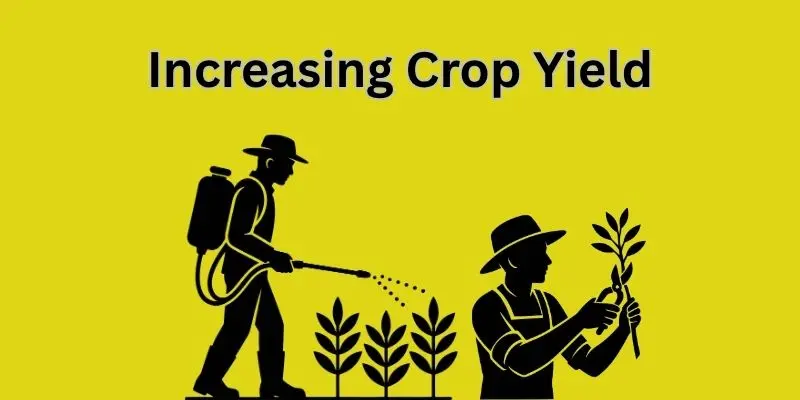
Major Factors Affecting Crop Yield
Before learning how to improve crop yield, you must recognize the factors that influence it:
- Soil health and fertility
- Seed quality and selection
- Climate and weather patterns
- Irrigation and water management
- Pest, weed, and disease control
- Fertilizer management
- Use of technology and modern machinery
Proven Ways to Increase Crop Yield
Below are the most effective and scientifically supported methods to increase crop yield and improve overall productivity.
1. Choose High-Quality, High-Yield Seeds
The journey toward a better harvest begins with the seed itself. Using certified, disease-resistant, and climate-adapted seeds can dramatically improve productivity. Hybrid and genetically improved varieties are specifically developed to withstand drought, pests, and diseases.
Tips:
- Always purchase seeds from trusted agricultural suppliers.
- Match the seed type to your soil and climate conditions.
- Rotate seed varieties every few seasons to maintain soil health.
2. Practice Efficient Irrigation and Water Management
Water is life for your crops — but both shortage and excess can hurt yield. Modern irrigation methods ensure every drop is used wisely.
Techniques:
- Drip irrigation: Directly delivers water to plant roots, reducing wastage.
- Sprinkler systems: Ideal for large fields with uneven terrain.
- Rainwater harvesting: Collect and store rainwater for dry seasons.
3. Improve Soil Fertility and Health
Healthy soil = healthy crops. Conduct a soil test regularly to know what nutrients your land lacks. Based on results, apply the right fertilizers — organic or chemical — in balanced proportions.
Tips:
- Add organic compost or farmyard manure to enrich soil microbes.
- Avoid overuse of nitrogen fertilizers to prevent soil acidification.
- Plant leguminous crops like beans or peas to naturally add nitrogen.
4. Use Sustainable and Integrated Farming Techniques
Sustainability ensures that your land remains fertile for generations.
Examples:
- Crop rotation: Helps maintain soil nutrients and prevent pest buildup.
- Intercropping: Planting two or more crops together improves biodiversity and yield.
- Conservation tillage: Reduces erosion and maintains soil moisture.
These sustainable farming techniques reduce dependency on chemicals and promote long-term productivity.
5. Control Pests, Weeds, and Diseases Smartly
Uncontrolled pest attacks and diseases can wipe out months of effort. Modern Integrated Pest Management (IPM) combines biological, mechanical, and chemical methods for efficient control.
Steps:
- Regularly inspect crops for early signs of disease.
- Use natural predators (like ladybugs) to reduce harmful insects.
- Apply pesticides only when necessary and follow safety guidelines.
6. Apply Balanced and Timely Fertilization
Fertilizers supply essential nutrients like nitrogen, phosphorus, and potassium — but balance is key. Over-fertilization can harm crops and pollute water bodies.
Best Practices:
- Follow the 4R principle: right source, right rate, right time, right place.
- Use micronutrients (like zinc and boron) when required.
- Combine organic and inorganic fertilizers for balanced nutrition.
7. Use Modern Agricultural Technology
Modern farming is powered by innovation. From drones to AI-based soil sensors, technology helps farmers make data-driven decisions.
Examples:
- Drones for aerial monitoring and spraying.
- Mobile apps for weather updates and crop disease alerts.
- Tractors and harvesters for efficiency and reduced labor cost.

8. Practice Crop Diversification
Depending on a single crop makes you vulnerable to market and climate risks. Growing a variety of crops improves income stability and soil health.
Benefits:
- Spreads financial risk.
- Improves soil nutrients.
- Reduces pest cycles and diseases.
9. Post-Harvest Management and Storage
Even after harvesting, yield can be lost if storage is poor. Proper handling and storage prevent post-harvest losses.
Tips:
- Dry grains properly before storage.
- Use clean, pest-free containers or silos.
- Maintain good ventilation to prevent mold.
10. Adopt Government and NGO Support Programs
Many governments and agricultural organizations provide training, subsidies, and technical support for farmers. Participating in these programs helps you access better seeds, fertilizers, and modern equipment.
The Role of Climate-Smart Agriculture
Climate change is now one of the biggest threats to productivity. Climate-smart agriculture (CSA) helps farmers adapt and mitigate its effects.
CSA Techniques Include:
- Drought-resistant crop varieties.
- Efficient irrigation to save water.
- Agroforestry and soil carbon management.
The Farmer’s Promise
Behind every grain of rice, every ear of wheat, and every fruit on the tree — there’s a farmer’s silent hope. A hope that their labor will feed families, educate children, and keep the soil alive. Increasing yield is not just a scientific goal; it’s a heartfelt mission to make agriculture sustainable, profitable, and respected once again.
When you adopt these ways to increase crop yield, you’re not just improving production — you’re building the future of food security, resilience, and prosperity.
FAQs about How to Increase Yield of Crop
Here are some of the most frequently asked questions about the How to Increase Yield of Crops: The Complete Guide for Modern Farmers
The best ways to increase crop yield include a combination of quality seeds, proper irrigation, balanced fertilizers, and sustainable farming techniques.
- Use certified, high-yield seed varieties suited to your climate.
- Apply drip or sprinkler irrigation to ensure efficient water use.
- Maintain soil fertility with compost, manure, or crop rotation.
- Implement integrated pest management (IPM) to control diseases.
Improving soil fertility is essential for long-term productivity. Start with a soil test to identify nutrient deficiencies.
- Add organic compost and manure to enhance microbial activity.
- Grow leguminous crops like beans or peas to naturally fix nitrogen.
- Avoid overuse of chemical fertilizers to prevent soil degradation
In dry or water-scarce regions, efficient water management is the key to improving crop yield.
- Install drip irrigation systems to deliver water directly to roots.
- Use mulching to reduce evaporation and retain soil moisture.
- Implement rainwater harvesting for use during dry periods.
In dry or water-scarce regions, efficient water management is the key to improving crop yield.
- Install drip irrigation systems to deliver water directly to roots.
- Use mulching to reduce evaporation and retain soil moisture.
- Implement rainwater harvesting for use during dry periods.
Sustainable farming focuses on increasing productivity without harming the environment.
- Use natural fertilizers and organic pesticides instead of chemicals.
- Practice intercropping and crop rotation to maintain soil health.
- Reduce excessive tillage to prevent erosion.
- Adopt renewable energy and water-saving technologies.
Modern technology has transformed agriculture by making it smarter and more precise.
- Drones help with crop monitoring and pesticide spraying.
- AI-based sensors analyze soil moisture, temperature, and nutrients.
- Mobile apps provide weather forecasts and pest alerts.
- Smart tractors and harvesters reduce labor and improve efficiency.
Conclusion:
Increasing crop yield requires knowledge, planning, and dedication. From choosing the right seeds and fertilizers to embracing sustainable farming techniques and modern technologies, every small step contributes to bigger results.
As agriculture evolves, so should our approach. Farmers who blend tradition with innovation will not only increase their yield but also secure a healthier planet for generations to come.





- Be Respectful
- Stay Relevant
- Stay Positive
- True Feedback
- Encourage Discussion
- Avoid Spamming
- No Fake News
- Don't Copy-Paste
- No Personal Attacks
- Be Respectful
- Stay Relevant
- Stay Positive
- True Feedback
- Encourage Discussion
- Avoid Spamming
- No Fake News
- Don't Copy-Paste
- No Personal Attacks
