Importance of Harvesting in Agriculture: Why the Right Harvest Makes or Breaks Farming
Published: 14 Dec 2025
Importance of Harvesting in Agriculture: Why the Right Harvest Makes or Breaks Farming. Many farmers work hard for months, yet when harvest time comes, they still face losses and disappointment. The crops look ready, but questions create confusion—should harvesting start now or wait a few more days? Is cutting early safer, or will waiting improve yield? Many farmers believe harvesting is just the final step, so they do not plan it properly. This misunderstanding leads to grain loss, poor quality, and low market prices. In reality, harvesting is the stage where all farming efforts are tested. Understanding its importance helps farmers protect their hard work and secure better income.
So, guys, without wasting time, let’s jump into the article to learn the Importance of Harvesting in Agriculture: Why the Right Harvest Makes or Breaks Farming
What Is Harvesting in Agriculture?
Harvesting is the process of cutting, gathering, and collecting mature crops from the field.
It is the final and most decisive step in the farming cycle.
All efforts—soil preparation, sowing, irrigation, fertilization, and pest control—lead to this moment.
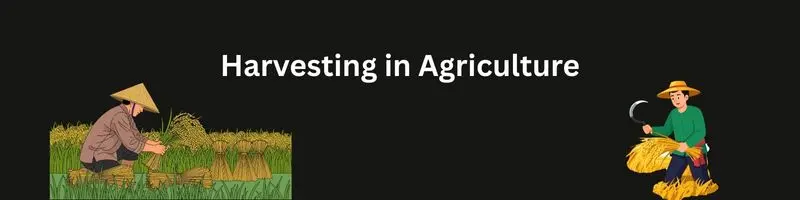
If harvesting is done incorrectly, even the best crop can lose value.
If done correctly, it maximizes yield, quality, shelf life, and market price.
Harvesting connects farming to food supply, income, storage, and processing.
That is why its importance cannot be ignored.
1. Harvesting Determines Crop Quality
Crop quality depends heavily on harvesting time and method.
Harvesting too early produces immature crops with low taste and nutrition.
Harvesting too late causes over-ripening, spoilage, and physical damage.
Correct harvesting ensures:
- Proper grain size
- Better taste and color
- Higher nutritional value
- Longer shelf life
For example, fruits harvested at the right maturity have better sweetness, texture, and appearance.
Vegetables harvested too late become fibrous and less marketable.
2. Harvesting Directly Affects Crop Yield
Yield is not just about how much grows in the field—it is about how much reaches the market safely.
Poor harvesting leads to:
- Grain shattering
- Fruit bruising
- Vegetable breakage
- Loss during cutting and collection
Proper harvesting minimizes field losses and protects produce from damage.
This means more saleable output from the same land.
Even a small improvement in harvesting can increase overall farm income significantly.
3. Harvesting Influences Market Value and Profit
Markets prefer fresh, uniform, and undamaged produce.
Harvesting at the correct stage increases market demand and price.
Crops harvested correctly:
- Look better
- Weigh more
- Store longer
- Attract better buyers
Late or damaged harvest often sells at a lower price or is rejected entirely.
Thus, harvesting directly controls profitability.
4. Harvesting Prevents Post-Harvest Losses
Post-harvest losses are one of the biggest problems in agriculture.
A large percentage of crops are wasted after harvesting due to poor handling.
Correct harvesting reduces:
- Mechanical damage
- Moisture loss
- Microbial growth
- Spoilage during transport
When crops are harvested properly, they remain fresh longer and resist decay.
5. Harvesting Protects Nutritional Value
Nutrients in crops change as they mature.
Harvesting at the right time preserves vitamins, minerals, and energy content.
For example:
- Leafy vegetables lose nutrients if over-mature
- Grains lose quality if harvested too wet or too dry
- Fruits lose vitamin content when overripe
Proper harvesting ensures food remains healthy for consumers.
6. Harvesting Affects Storage Life
Storage success depends on correct harvesting.
Crops harvested at improper moisture levels spoil quickly.
Correct harvesting:
- Prevents fungal growth
- Reduces insect attack
- Maintains grain hardness
- Improves storage duration
This is especially important for grains like wheat, rice, maize, and pulses.
7. Harvesting Ensures Seed Quality
Farmers who save seeds must harvest carefully.
Poor harvesting damages seeds and reduces germination.
Correct harvesting ensures:
- High seed viability
- Strong seedlings
- Better next-season yield
Seed crops require special attention to maturity, moisture, and handling.
8. Harvesting Saves Time and Labor
Well-planned harvesting improves efficiency.
Knowing the right time and method reduces repeated field visits and labor waste.
Efficient harvesting:
- Saves manpower
- Reduces fatigue
- Lowers cost
- Speeds up post-harvest operations
This is especially important during peak seasons when labor is limited.
9. Harvesting Supports Food Security
Harvesting plays a key role in feeding populations.
Losses during harvesting reduce available food.
Correct harvesting:
- Increases usable food supply
- Reduces waste
- Improves availability throughout the year
Food security depends not only on production but also on proper harvesting and storage.
10. Harvesting Maintains Crop Safety
Incorrect harvesting can contaminate crops with:
- Soil
- Chemicals
- Pathogens
Clean harvesting practices ensure:
- Safe food
- Lower contamination
- Compliance with food standards
This is especially important for vegetables and fruits eaten fresh.
11. Harvesting Impacts Processing Quality
Many crops are processed into flour, oil, juice, or packaged food.
Harvesting affects processing efficiency.
For example:
- Over-moist grains reduce milling quality
- Overripe fruits reduce juice quality
- Damaged crops increase processing waste
Correct harvesting ensures smooth processing and higher product quality.
12. Harvesting Reduces Pest and Disease Spread
Delayed harvesting exposes crops to pests, birds, rodents, and diseases.
Early and timely harvesting prevents infestation.
Removing mature crops quickly:
- Breaks pest life cycles
- Reduces field contamination
- Protects nearby crops
This helps maintain overall farm health.
13. Harvesting Helps Maintain Soil Health
Harvest timing affects soil preparation for the next crop.
Delayed harvesting may disturb land preparation schedules.
Timely harvesting allows:
- Quick land clearing
- Early soil preparation
- Better crop rotation
This supports sustainable farming systems.
14. Harvesting Improves Farm Planning
Correct harvesting helps farmers plan:
- Storage
- Transport
- Marketing
- Next planting
It creates a smooth flow between crop cycles and reduces chaos during peak seasons.
15. Harvesting Enhances Farmer Confidence
A successful harvest gives farmers confidence and motivation.
Seeing healthy produce reach the market boosts morale.
This emotional aspect is often ignored but very important for long-term farming success.
16. Harvesting Supports Traditional and Modern Farming
Both traditional hand harvesting and modern mechanized harvesting depend on correct timing.
Regardless of method:
- Decision-making remains critical
- Crop maturity remains the key factor
Harvesting knowledge connects ancient wisdom with modern technology.
17. Harvesting Reduces Environmental Waste
When crops are harvested properly, fewer resources are wasted.
This means:
- Less water wasted
- Less fertilizer wasted
- Less energy wasted
Sustainable agriculture depends on efficient harvesting.
18. Harvesting Helps Meet Market Demand
Markets demand specific sizes, maturity levels, and freshness.
Correct harvesting ensures:
- Uniform produce
- Consistent supply
- Better customer trust
This strengthens farmer-buyer relationships.
19. Harvesting Protects Farm Investment
Every input—seed, water, fertilizer, labor—is an investment.
Harvesting protects that investment.
Poor harvesting wastes months of effort.
Good harvesting turns effort into income.
20. Harvesting Is the Final Success Indicator
Harvesting shows whether farming was successful or not.
It reflects:
- Farmer skill
- Crop management
- Planning ability
It is the moment when effort turns into reward.
Conclusion
Harvesting is not just the last step in farming—it is the most important one.
The timing, method, and care used during harvesting determine crop quality, yield, profit, storage life, and food safety.
Even a perfectly grown crop can fail if harvesting is done incorrectly.
By understanding the importance of harvesting, farmers can reduce losses, improve income, protect food quality, and strengthen food security.
Whether traditional or modern, smart harvesting is the key that turns farming effort into real success.





- Be Respectful
- Stay Relevant
- Stay Positive
- True Feedback
- Encourage Discussion
- Avoid Spamming
- No Fake News
- Don't Copy-Paste
- No Personal Attacks
- Be Respectful
- Stay Relevant
- Stay Positive
- True Feedback
- Encourage Discussion
- Avoid Spamming
- No Fake News
- Don't Copy-Paste
- No Personal Attacks
