Types of Agriculture Farming: A Complete, Modern Guide for Every Farmer
Published: 17 Nov 2025
Farming has never been simple — every land, every climate, and every farmer needs a different method to grow crops. Sometimes traditional farming works… sometimes modern techniques save the entire season. So the biggest question is: Which type of agriculture farming is right for you?
This guide clears the confusion and walks you through all types of farming used around the world — from old methods to advanced, high-tech systems.
So, guys, without wasting time, let’s jump into the article to learn the Types of Agriculture Farming: A Complete, Modern Guide for Every Farmer
1. What Are the Main Types of Agriculture Farming?
Agriculture isn’t one-size-fits-all. Over the years, different farming systems were developed based on land, climate, soil, technology, and farmer needs.
Below are the 12 major types of agriculture farming used worldwide.
- Subsistence Farming
- Commercial Farming
- Intensive Farming
- Extensive Farming
- Mixed Farming
- Organic Farming
- Plantation Farming
- Shifting Cultivation
- Dry Farming
- Wet Farming
- Aquaponic Farming
- Here we explain the different types of agriculture farming in a simple and clear way. These points will help you quickly understand how each farming method works before reading the full detailed description.
1. Subsistence Farming
Where farmers grow crops only for their family’s consumption.
Key Features
- Small land area
- Low investment
- Traditional tools
- Mixed crops
Best For
Rural areas & low-income families.
2. Commercial Farming
Large-scale farming where crops are grown for profit.
Key Features
- Uses machinery
- High investment
- High yields
- Market-based production

Examples
Wheat, rice, sugarcane, cotton farms.
3. Intensive Farming
Maximum production from minimal land using fertilizers, irrigation, and high-yield seeds.
Best For
Areas with small land but high population.
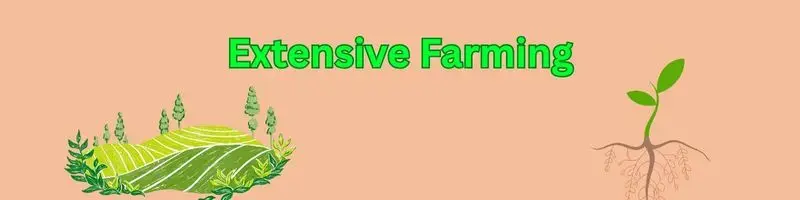
4. Extensive Farming
Large land, low labor, and machinery-based systems.
Features
- Huge fields
- Low population areas
- Mechanized seeding + harvesting
5. Mixed Farming
Growing crops + raising animals on the same land.
Benefits
- Multiple income sources
- Organic manure available
- Lower input cost
6. Organic Farming
Farming without chemicals, pesticides, or synthetic fertilizers.
Benefits
- Healthy food
- Eco-friendly
- High demand in markets
7. Plantation Farming
Single crop grown on large estates with skilled labor.

Crops
Tea, coffee, rubber, cocoa, coconut.
8. Shifting Cultivation
Land is used for a few years, then abandoned to restore fertility.
Regions
Forest areas (Northeast India, Amazon, Africa).
9. Dry Farming
Farming in low-rainfall regions using drought-resistant crops.
Crops
Bajra, jowar, beans, groundnuts.
10. Wet Farming
Farming in heavy rainfall areas or where irrigation is plentiful.
Crops
Rice, sugarcane, jute.
11. Aquaponic Farming
Fish + plants grown together in a closed-loop water system.
Benefits
- Uses 90% less water
- Fast crop growth
- No soil needed
12. Hydroponic & Vertical Farming
Growing plants in nutrient-rich water under controlled indoor conditions.
Advantages
- Year-round production
- High density
- Zero soil
- High-quality produce
2. Traditional vs Modern Farming:
Traditional Farming
- Manual labor
- Animals used for plowing
- Local seeds
- Low input
- Natural fertilizers
Modern Farming
- Tractors, drones, AI
- HYV seeds
- Fertilizers & pesticides
- Efficient irrigation
- High yields
Modern farming focuses on efficiency, while traditional farming focuses on sustainability.
3. Factors That Influence Which Farming Type You Should Choose
1. Climate
Rainfall, temperature, sunlight.
2. Soil Type
Clay, loamy, sandy.
3. Water Availability
Irrigation vs rainfall-fed areas.
4. Land Size
Large land = extensive/commercial
Small land = intensive/mixed farming
5. Capital Investment
Low budget: subsistence, dry farming
High budget: hydroponics, commercial farming
6. Market Demand
Cash crops vs food crops.
4. Steps of Agriculture
Step 1: Soil Preparation
Plowing → Leveling → Fertility improvement.
Step 2: Seed Selection
Choose high-yield, disease-resistant seeds.
Step 3: Sowing
Manual or mechanized seed placement.

Step 4: Irrigation
Drip, sprinkler, canal, rain-fed.
Step 5: Weed Control
Manual or herbicides.
Step 6: Crop Protection
Pest control + disease management.
Step 7: Harvesting
Manual sickles or machines.
Step 8: Storage
Drying, cleaning, airtight storage.
5. Pros and Cons of Each Type of Agriculture Farming
1. Subsistence Farming
Pros
- Low cost
- Natural methods
- Simple implementation
Cons
- Low yield
- Not profitable
- Weather dependent
2. Commercial Farming
Pros
- High profit
- High productivity
- Uses modern technology
Cons
- High investment
- Requires skilled workers
3. Organic Farming
Pros
- Eco-friendly
- High market value
Cons
- Lower yield
- Slow process
4. Mixed Farming
Pros
- Multiple income streams
- Lower risk
Cons
- Requires good management
5. Hydroponic/Vertical Farming
Pros
- Year-round production
- Fast growth
Cons
- Expensive setup
- Requires training
6. Dry Farming

Pros
- Works in drought
- Low cost
Cons
- Low yield
- High crop failure risk
6. Which Type of Farming Is Best
Farmers shifting to sustainable, water-efficient, and high-yield systems prefer:
- Organic Farming
- Vertical/Indoor Farming
- Mixed Farming
- Aquaponics & Hydroponics
- Commercial Crop Farming
Because they give:
More income
Less water use
Higher quality produce
Long-term soil health
FAQs about Types of Agriculture Farming:
Here are some of the most frequently asked questions Types of Agriculture Farming: A Complete, Modern Guide for Every Farmer
Agriculture farming includes subsistence, commercial, intensive, extensive, mixed, organic, vertical, hydroponic, and plantation systems. Each type fits different climates, land sizes, and budgets. Choosing the right method increases yield and income.
Commercial farming, hydroponics, aquaponics, and organic farming are the most profitable in 2025. They produce high yields and meet rising market demand. With proper planning, small farmers can also profit.
Traditional farming uses natural methods, manual labor, and local seeds. Modern farming uses machinery, fertilizers, irrigation systems, and high-yield crops. Modern methods produce more food in less time.
Consider your soil type, water availability, land size, budget, and market demand. Dry areas need drought-tolerant farming, while irrigation areas can use intensive or commercial systems.
Conclusion
In today’s changing agricultural world, understanding different types of farming is the first step toward smarter decision-making. Each method—whether traditional, organic, commercial, or modern indoor systems—offers unique benefits depending on your land, climate, and resources. By choosing the right farming type, farmers can boost productivity, reduce risks, and build long-term sustainability. Modern techniques like hydroponics, mixed farming, and precision agriculture are opening new doors for higher income and efficient crop growth. As trends shift toward eco-friendly and profitable systems, informed farmers are the ones who rise fastest. With the right knowledge and the right farming method, the future of your farm can be stronger, smarter, and more successful.




- Be Respectful
- Stay Relevant
- Stay Positive
- True Feedback
- Encourage Discussion
- Avoid Spamming
- No Fake News
- Don't Copy-Paste
- No Personal Attacks
- Be Respectful
- Stay Relevant
- Stay Positive
- True Feedback
- Encourage Discussion
- Avoid Spamming
- No Fake News
- Don't Copy-Paste
- No Personal Attacks
